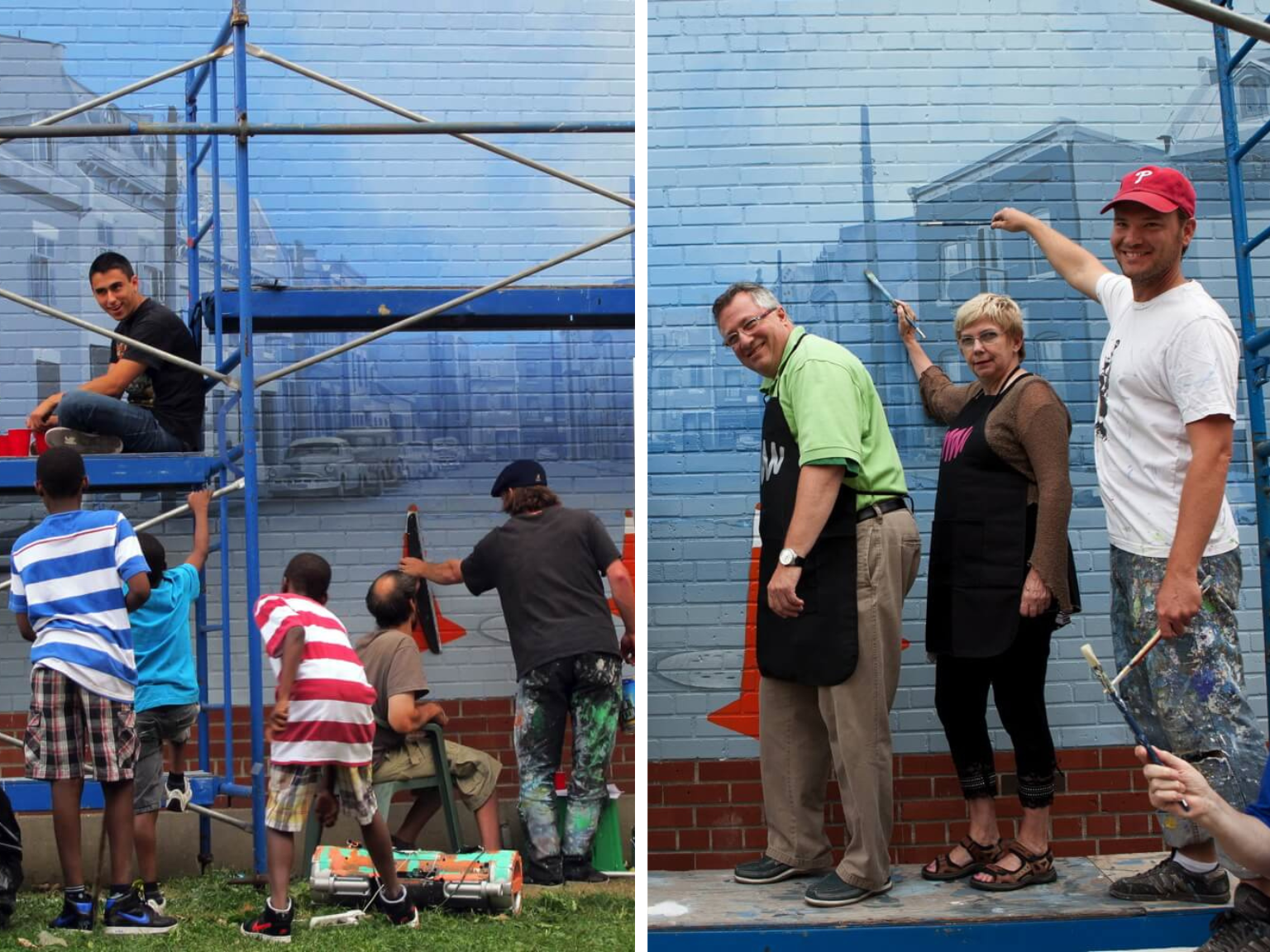
Creation of the mural L’air du temps by Phillip Adams (2012) | Photo credit: Olivier Bousquet
What if a mural could do so much more than transform a wall?
For 20 years, MU has been painting Montreal. But more than that, MU creates projects that take root in neighborhoods, alongside communities and the artists who bring the city to life.
Because a mural with MU means a neighborhood that recognizes itself in its landscape, children reinventing their schoolyard, residents reclaiming their living environment in new ways, a paved-over space becoming a real meeting place, or even a work of art that directly inspires the design of a park.
Over the years, MU’s projects have gone beyond the artistic realm to have real social, community, cultural, and even tourism impacts. des ans, les interventions de MU ont dépassé le cadre artistique pour avoir de véritables répercussions sociales, communautaires, culturelles et même touristiques.
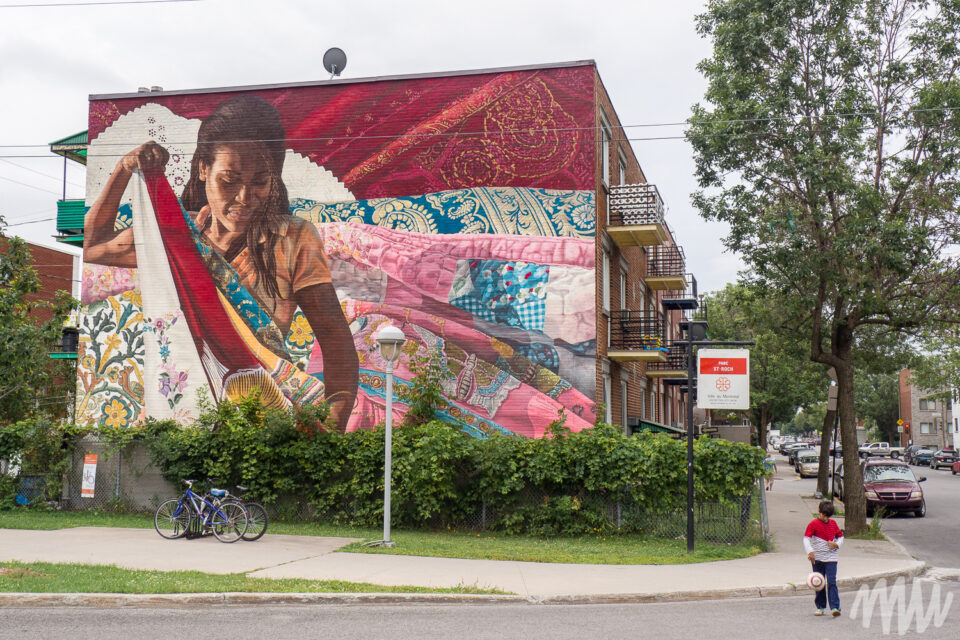
The mural Cent motifs, un paysage, by Annie Hamel | Photo credits: Olivier Bousquet
In Parc-Extension, a mural that tells the story of a neighborhood
Have you ever looked at a mural and thought, “That’s really our neighborhood”?
That’s exactly what Cent motifs, un paysage (A Hundred Patterns, A Landscape) captures, created by artist Annie Hamel for the centennial of the Parc-Extension neighborhood. Rather than depicting the neighborhood through a single image, the artist chose to bring together a multitude of pieces: embroidery, drapery, fabrics, and patterns from Quebec, England, Greece, Hungary, Guatemala, Pakistan, Sri Lanka, Haiti, and India.
Much like Parc-Extension itself, shaped by migration and, over time, a true land of welcome, the mural brings together all these influences to create a landscape that exists nowhere else.
Behind this large, colorful composition lies a message: we are here, and all our stories are part of the landscape. The work has become a true landmark for neighborhood residents, who identify with it strongly. And around the mural, MU continues this work through workshops offered to youth aged 13 to 17.
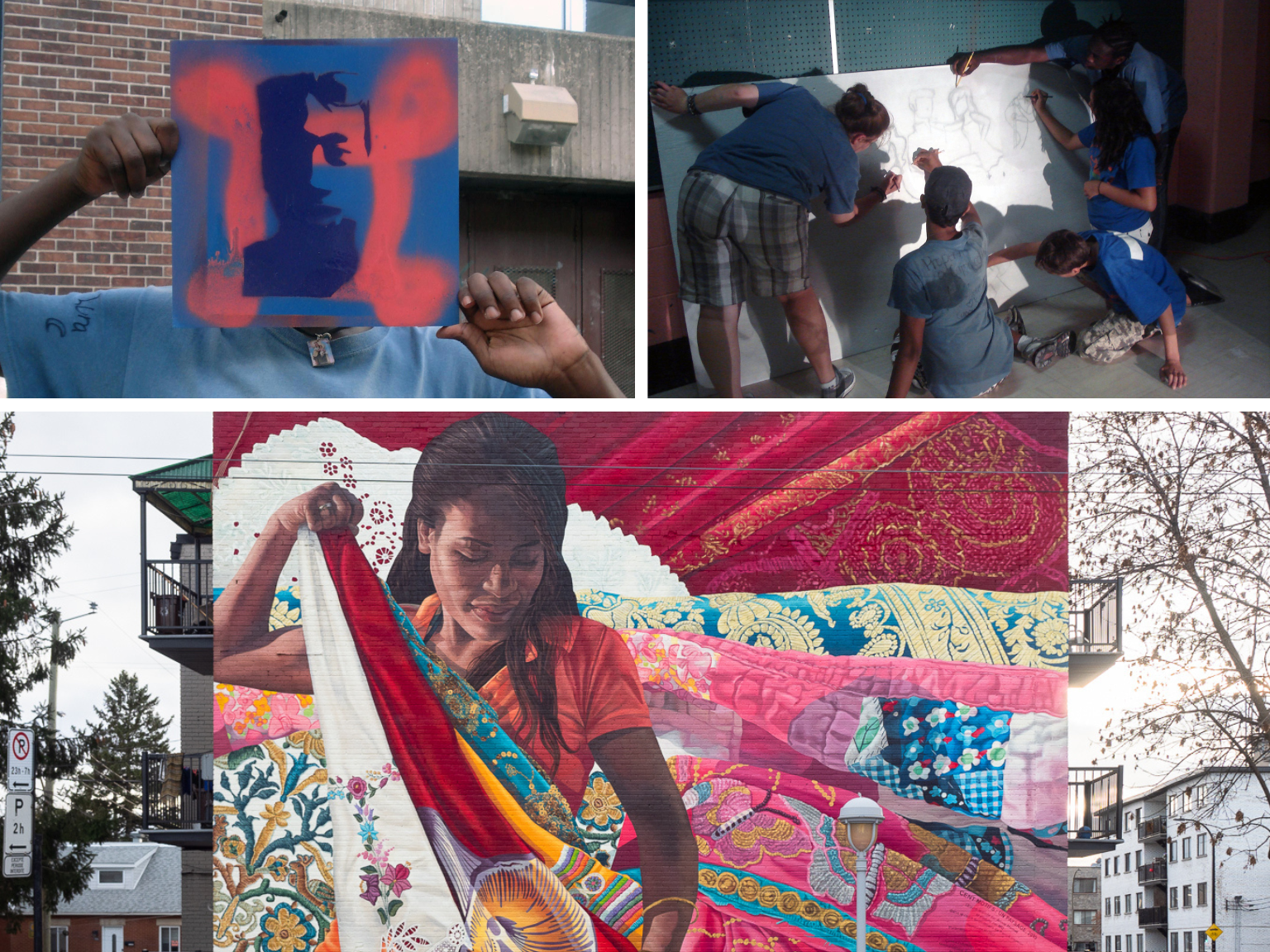
Workshops held with youth aged 13 to 17 in connection with the mural Cent motifs, un paysage | Photo credits: Olivier Bousquet
.
.
At Habitations Jeanne-Mance, a transformation written over the years
At Habitations Jeanne-Mance, the story begins in 2009, as major renovation and redevelopment work gradually transforms the neighborhood. MU chose to move in for good and made it home for nearly 15 years.
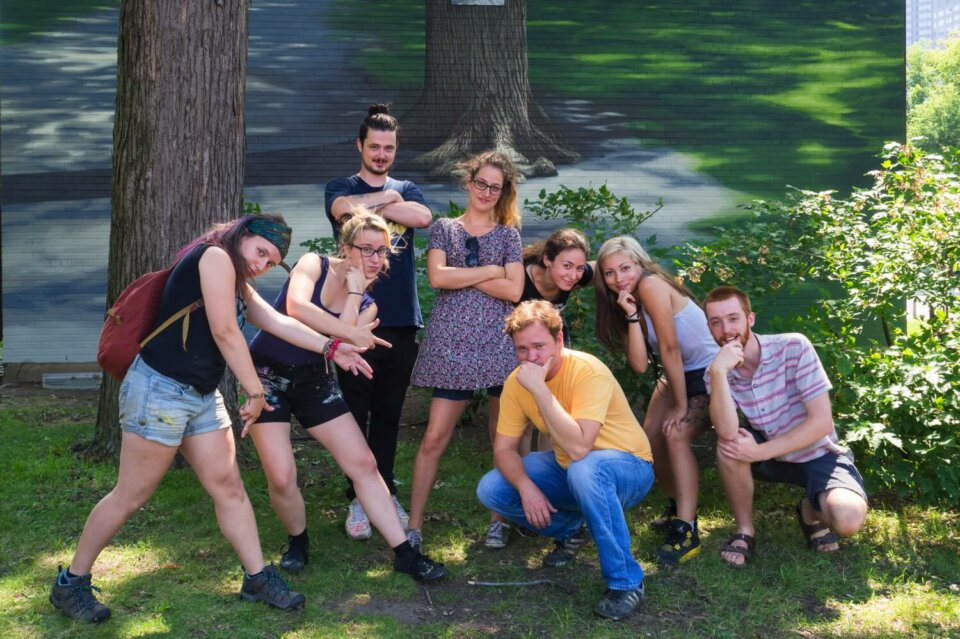
This presence allowed a real relationship to develop with residents. Year after year, MU has run workshops with youth and families, notably with GO Jeunesse and created mosaics, murals in common areas, and creative projects with young people.


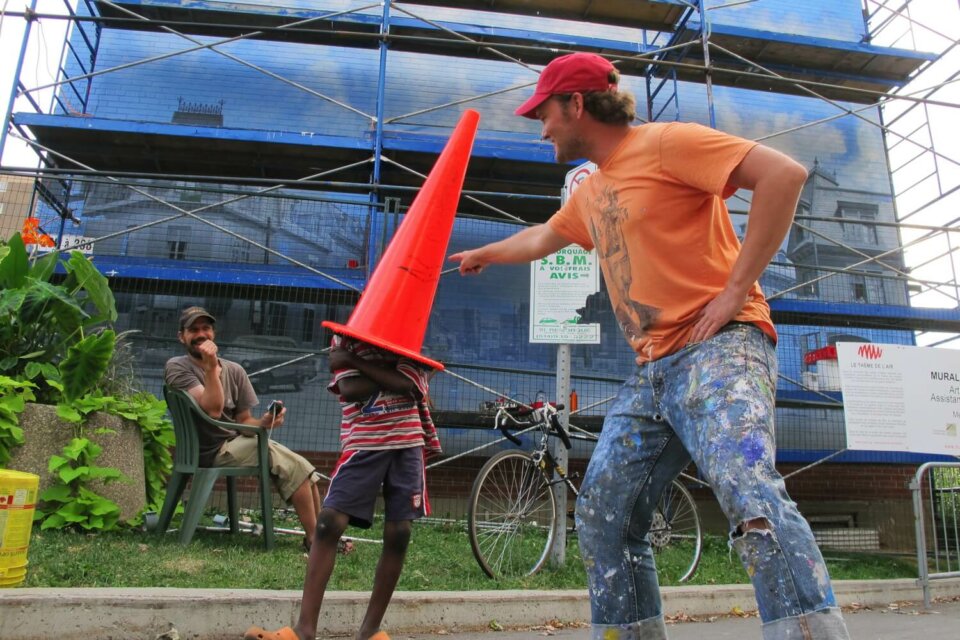
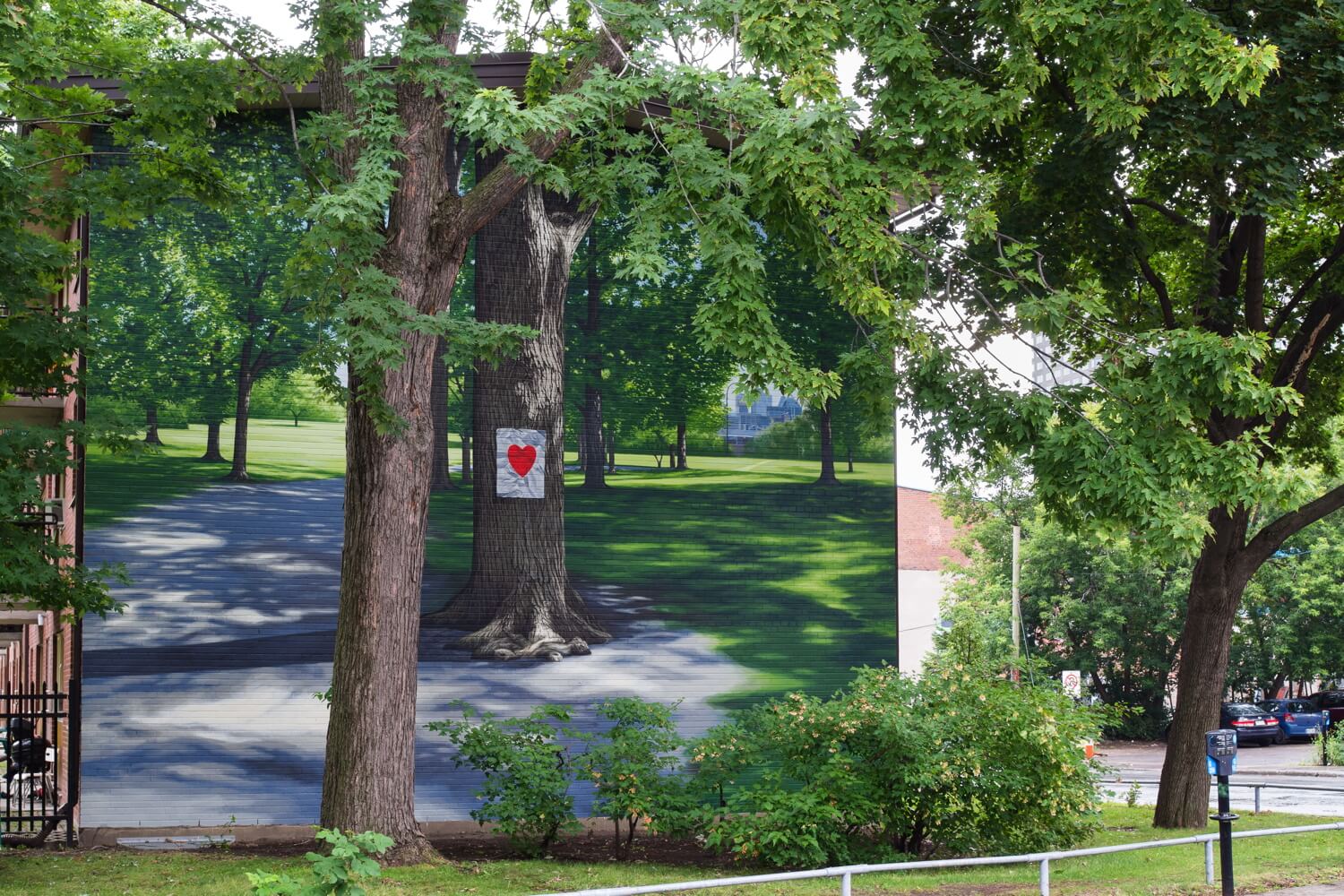
Les 4 éléments series created by Phillip Adams | Photo credits: Olivier Bousquet
Two series of four murals, Les 4 saisons (The Four Seasons) and Les 4 éléments (The Four Elements), mark the Habitations’ landscape. Created by anglophone artists David Guinn and Phillip Adams, they are the result of several years of work in the neighborhood, forging bonds that go far beyond the artworks themselves.
The transformation isn’t measured only in the number of murals, it also lies in the trust built with residents, the young people who take part in the workshops, and the common spaces that have gradually become more beautiful, more vibrant, and safer.


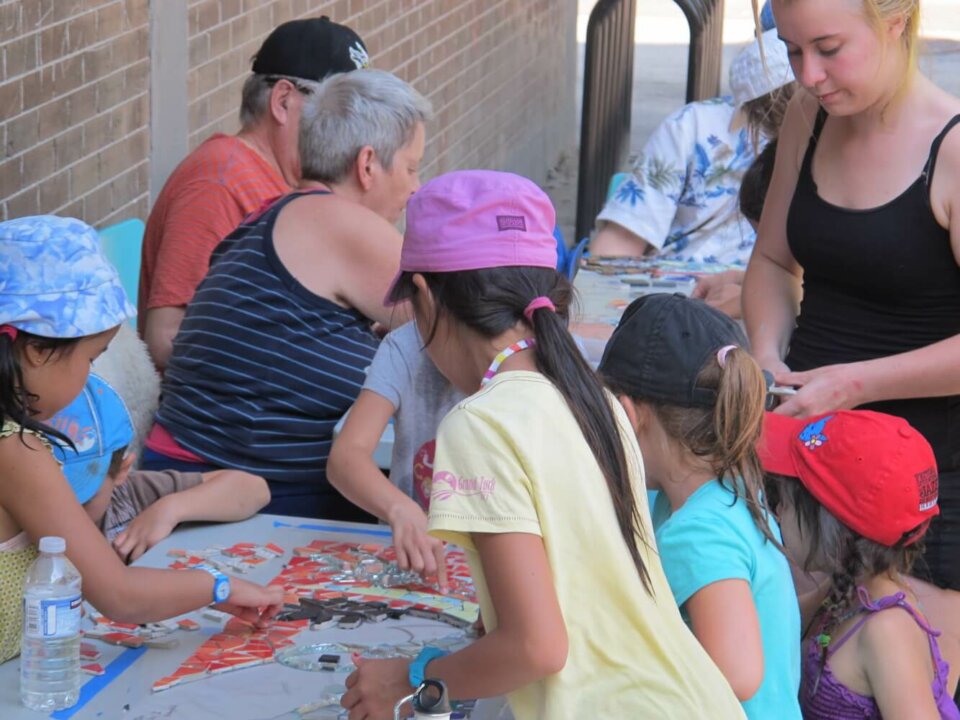
Les 4 saisons series created by Phillip Adams and David Guinn – Youth workshops at HJM | Photo credits: Olivier Bousquet
.
.
In Verdun, a mural even inspires architects!
Here’s a story that we might not have seen coming!
With Le Marais, artists Philippe Allard and Roadsworth worked on a mural meant to accompany the transformation of a vacant lot into a cooling green space. Their inspiration: local wetlands and vulnerable species. The idea was to create a dialogue between two ecosystems, the marsh, which naturally purifies water, and the future park, which would help cool and purify the urban air.
Then the park’s architects discovered the mural’s model… and decided to draw inspiration from it too! The patches of greenery imagined by the artists became water lilies, while the water features took the shape of large cattails. Little by little, elements of the artwork made their way into the park itself.
The mural thus played a direct role in shaping the new space, creating a dialogue between art, architecture, and urban design.
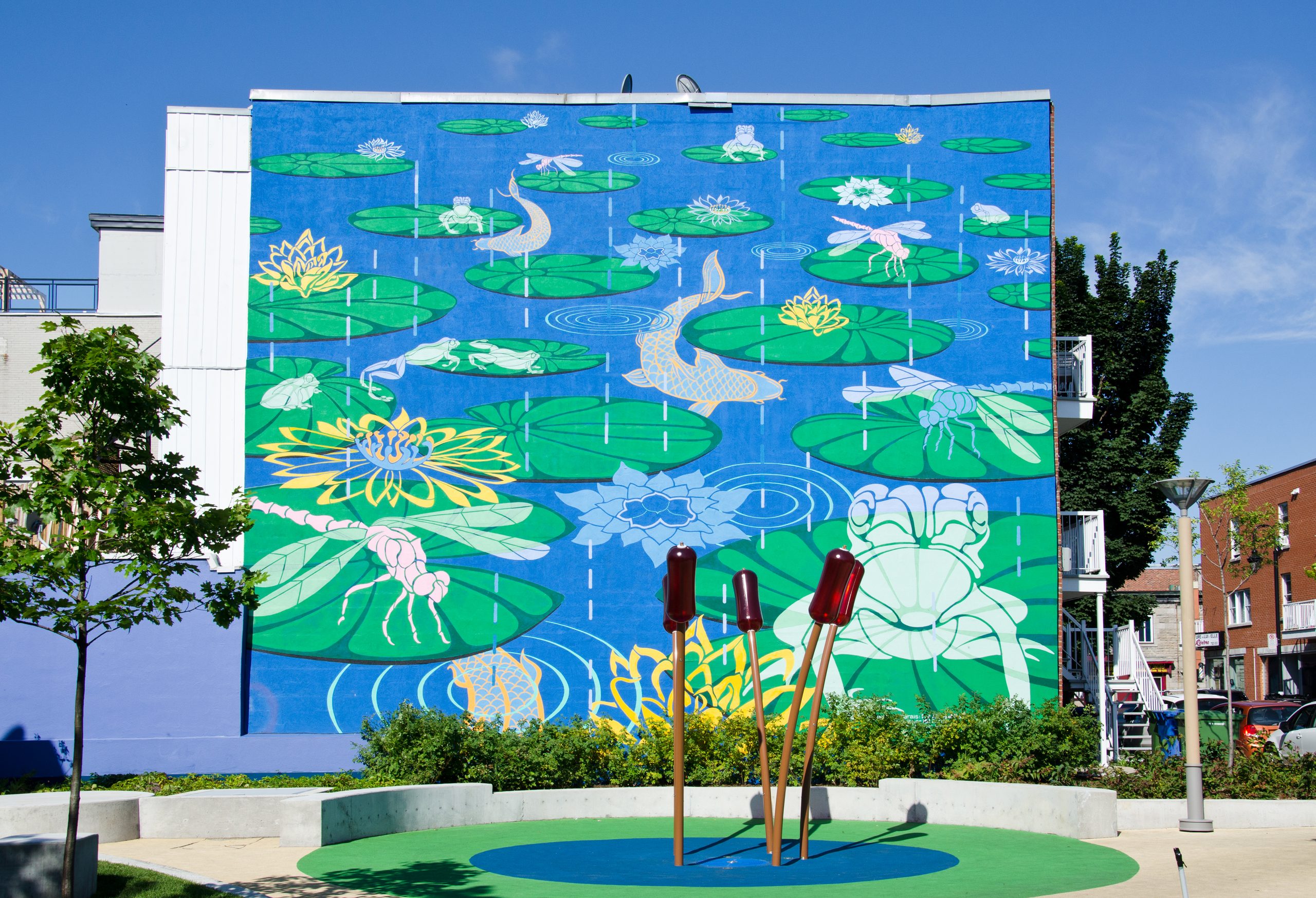
The mural Le Marais created by Philippe Allard and Roadsworth | Photo credit: Olivier Bousquet
.
.
In a Parc-Extension schoolyard, children get a say
With the work Connexion, MU returns to Parc-Extension with a third mural completing a triptych dedicated to French-language learning among newcomers to Quebec.
Created by Beige Fluo and MC Marquis, in partnership with the Fondation pour la langue française, the work explores what happens when language becomes a bridge between people learning French and their new environment.
To extend this idea of connection into the daily lives of children living in the Habitations, the two artists drew on kids’ own ideas to design games symbolizing bonds and encounters. These games were then painted on the ground by the MU team, in dialogue with the mural itself.
The work becomes a space to live in as much as to look at: children can play on it, walk through it, and make it their own.
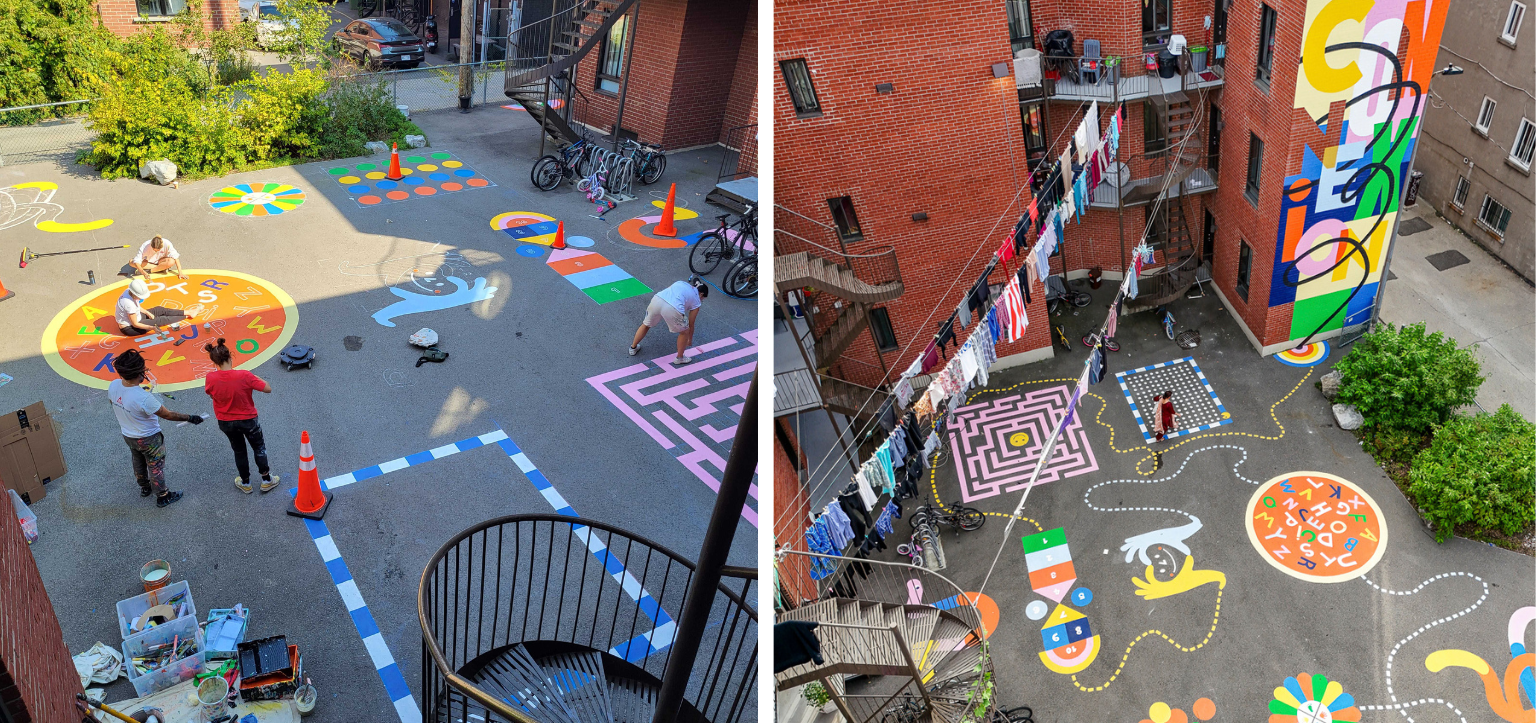
The mural Connexion created by Beige Fluo and MC Marquis | Photo credits: Olivier Bousquet and Kenan Alboshi
.
.
Place Boyer: from parking lot to true community space
Do you remember Place Boyer before its transformation? Not long ago, it was a municipal parking lot. Today, the scene has completely changed: trees, shrubs, hundreds of plants, a rain garden, furniture, misters, lighting, and an activity kiosk now fill the space.
Above it all stands L’Estérel, the floral mural created by Marie-Claude Marquis. With this transformation, the site has changed purpose entirely. People now come here to sit, gather, take part in an activity, or enjoy a summer concert. The mural accompanies this new rhythm, giving the space a strong identity and becoming one of its familiar landmarks.
From a space once dedicated to parking, Place Boyer has become a true neighborhood gathering place.
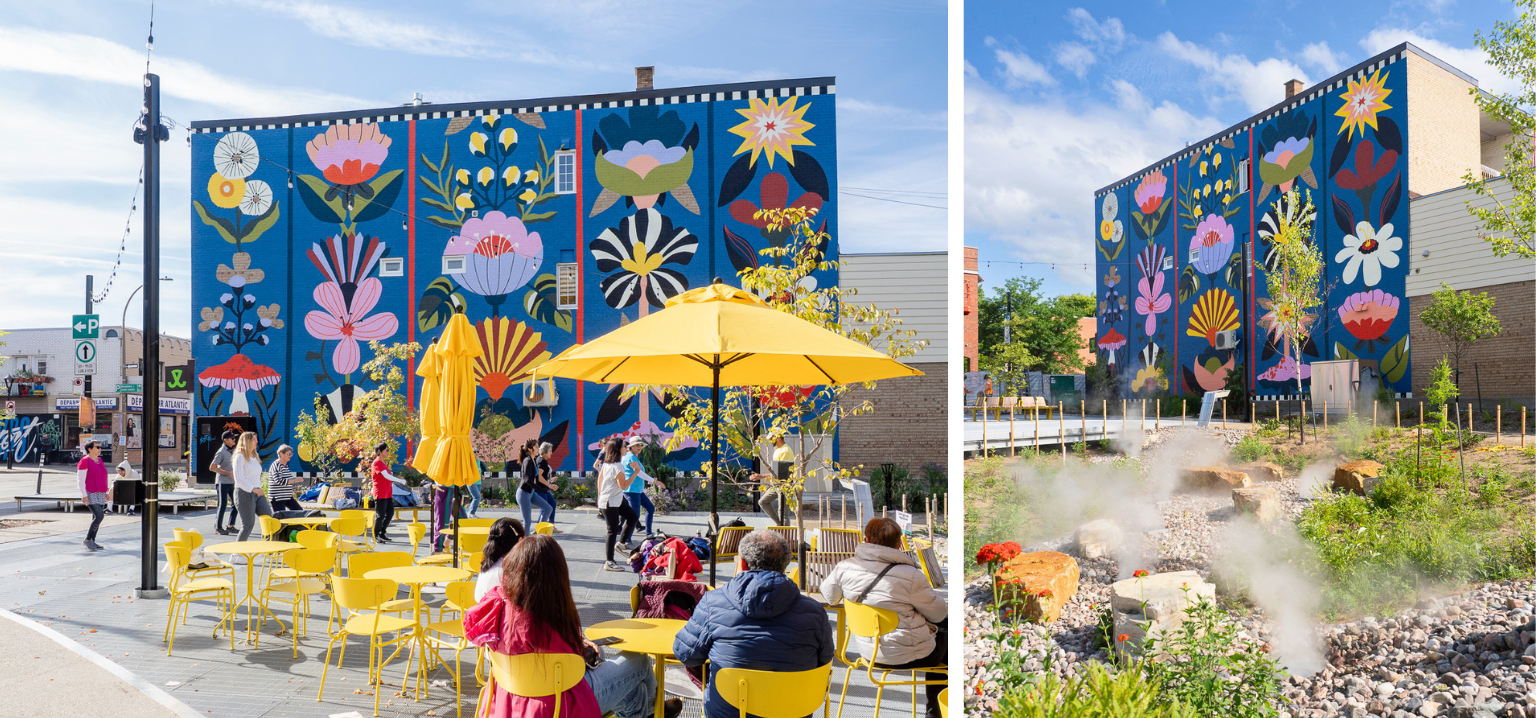
The mural L’Estérel created by MC Marquis in its setting | Photo credits: Olivier Bousquet
.
.
At Maison Akhwà’tsire, art accompanies a new beginning
Some projects carry a particularly powerful symbolism.
At Maison Akhwà’tsire, launched by Projets autochtones du Québec, permanent housing is offered to Indigenous people experiencing homelessness. Artist Eruoma Awashish created two murals there, each carrying strong symbolism: Canada geese are powerful when they fly together, knowing how to find their way toward a gentler climate.
For those who walk through the doors of Maison Akhwà’tsire, this image takes on special resonance. She speaks of displacement, solidarity, territory, and the distance traveled but above all, of the possibility of moving toward something gentler.
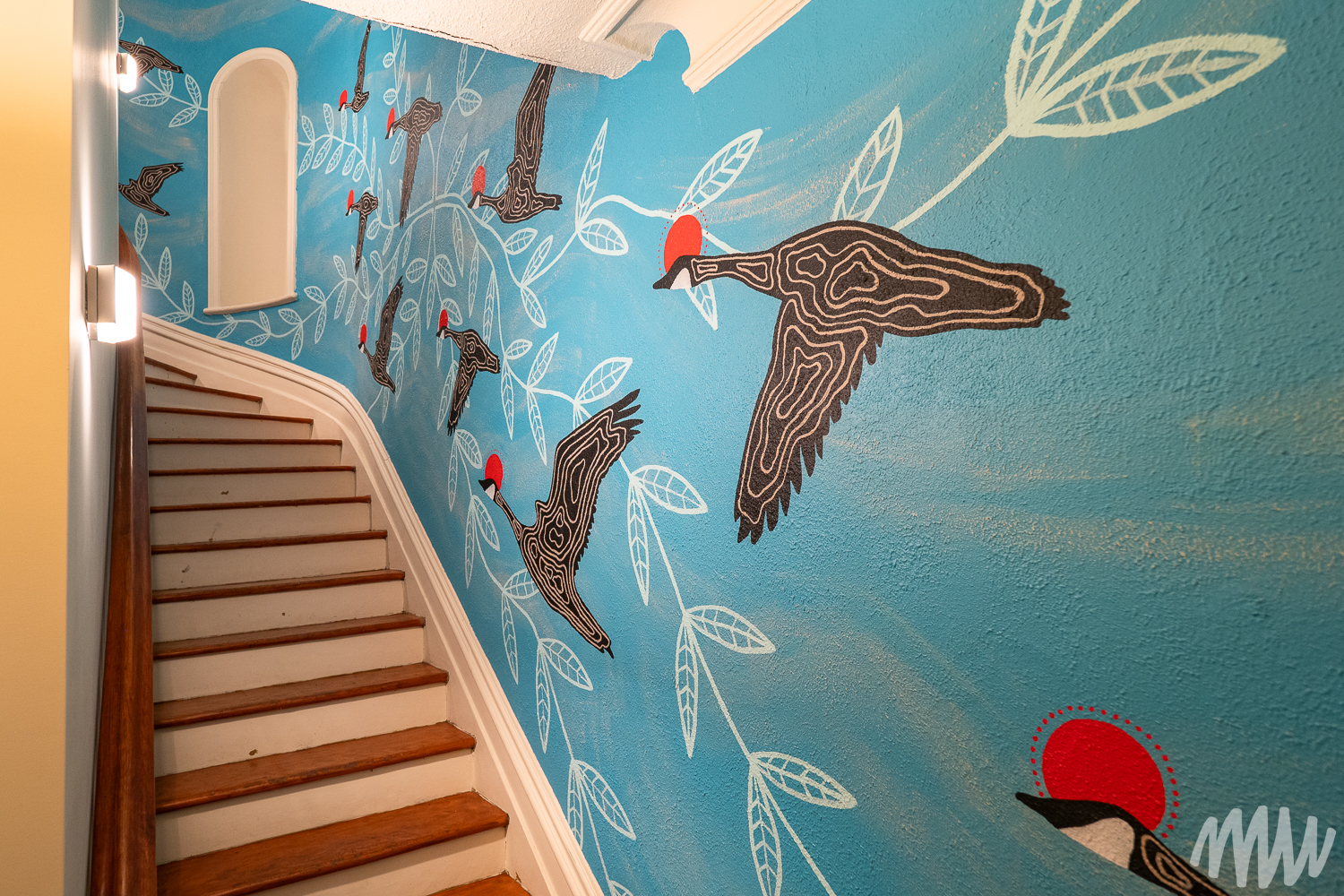
One of the murals created by Eruoma Awashish at Maison Akhwà’tsire | Photo credit: Olivier Bousquet
.
.
And finally: how could we not mention Leonard Cohen?
Some murals transform a place. And then there are those that become symbols of an entire city.
To pay tribute to Leonard Cohen, MU brought together American artist El Mac and Montreal painter Gene Pendon. Together, they created a monumental work, visible from downtown, Mount Royal, and many other vantage points across Montreal.
Cohen’s face now stands out in the city’s skyline and quickly became an essential landmark. An iconic figure of Montreal, Quebec, and Canada, Leonard Cohen is also recognized internationally. His mural, “Tower of Songs,” is today one of Montreal’s most famous, drawing both Montrealers and visitors alike.
The mural is part of the Les bâtisseurs culturels montréalais (Montreal Cultural Builders) collection, created by MU in 2010 to honor the artists who have shaped or inspired the city.
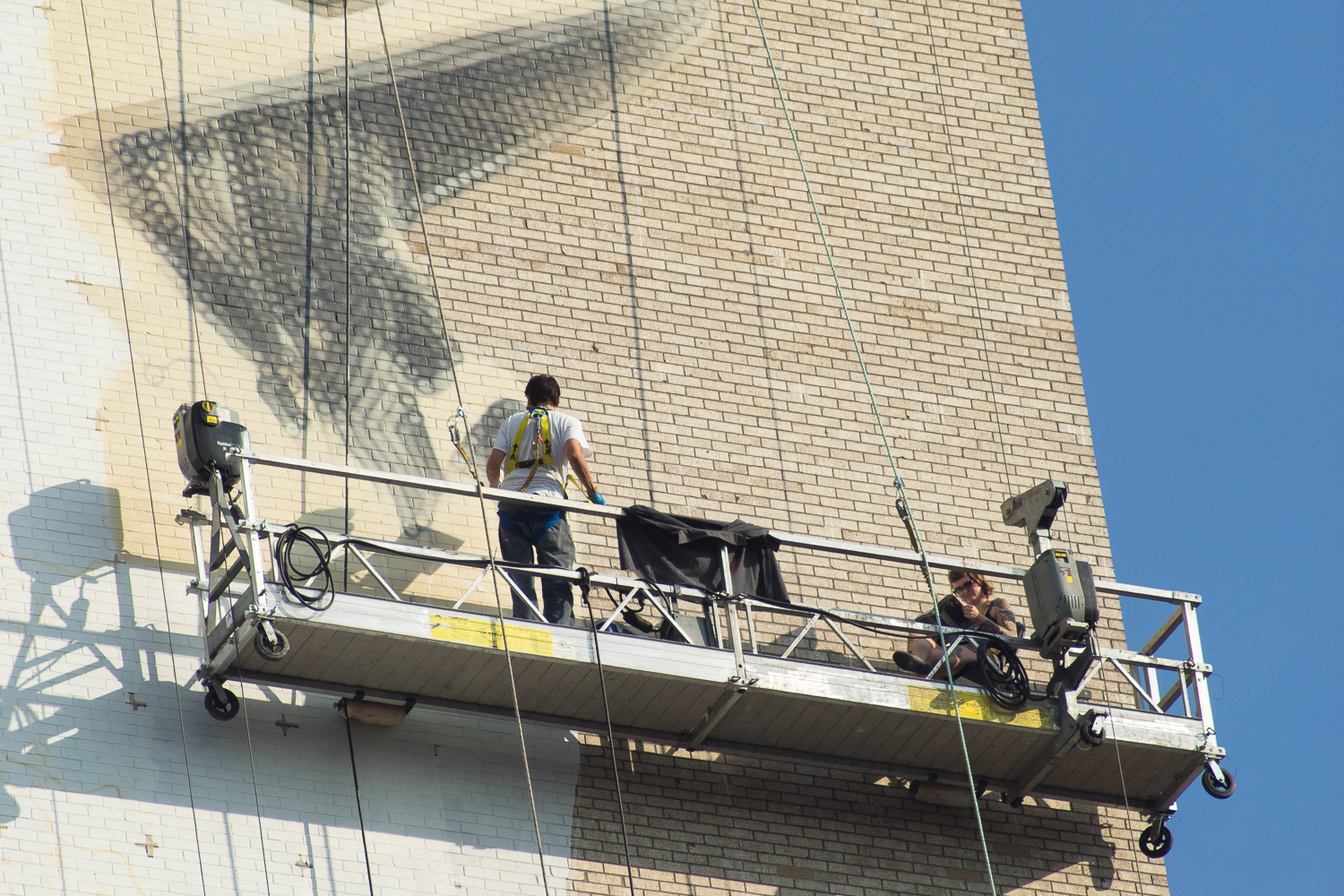
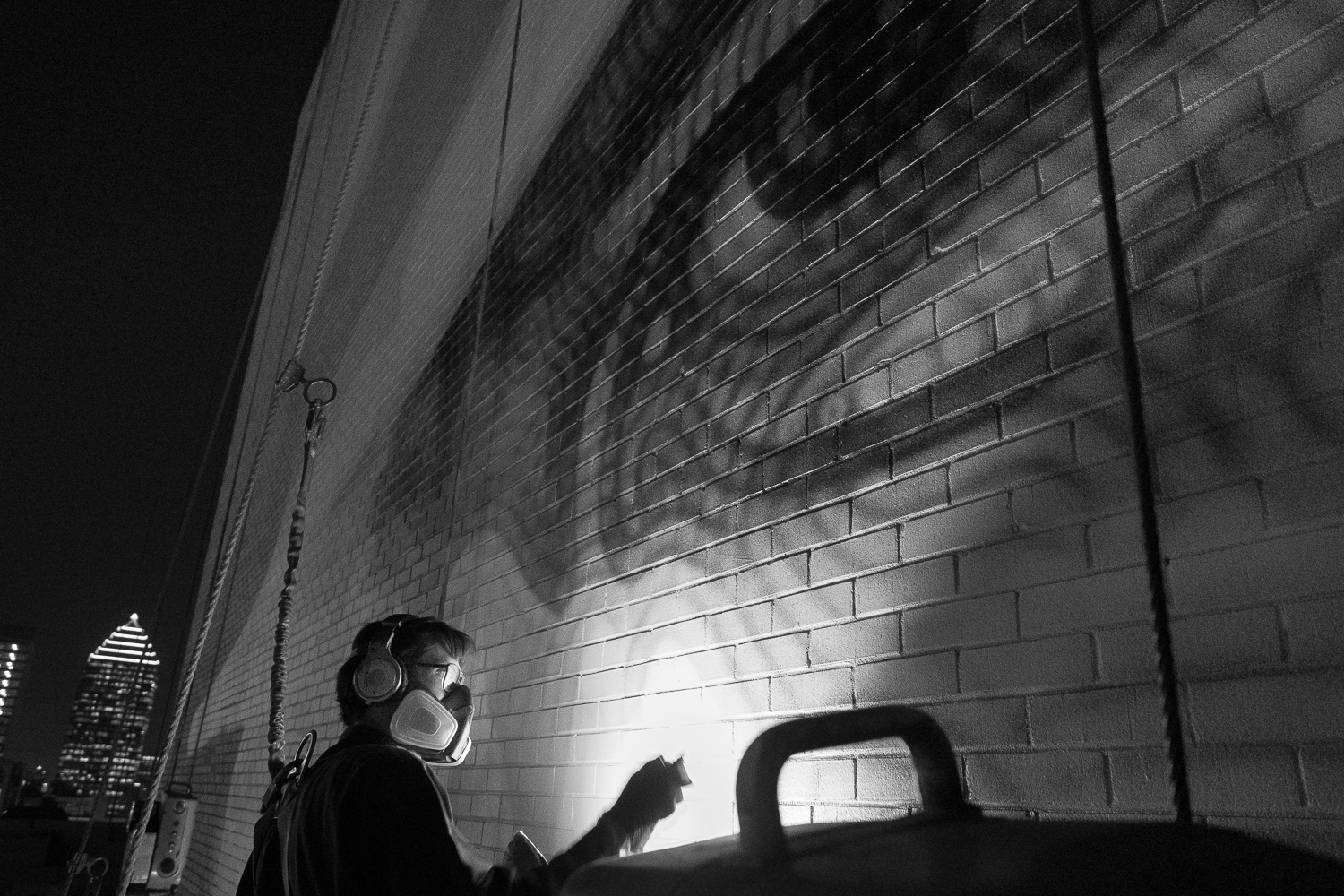
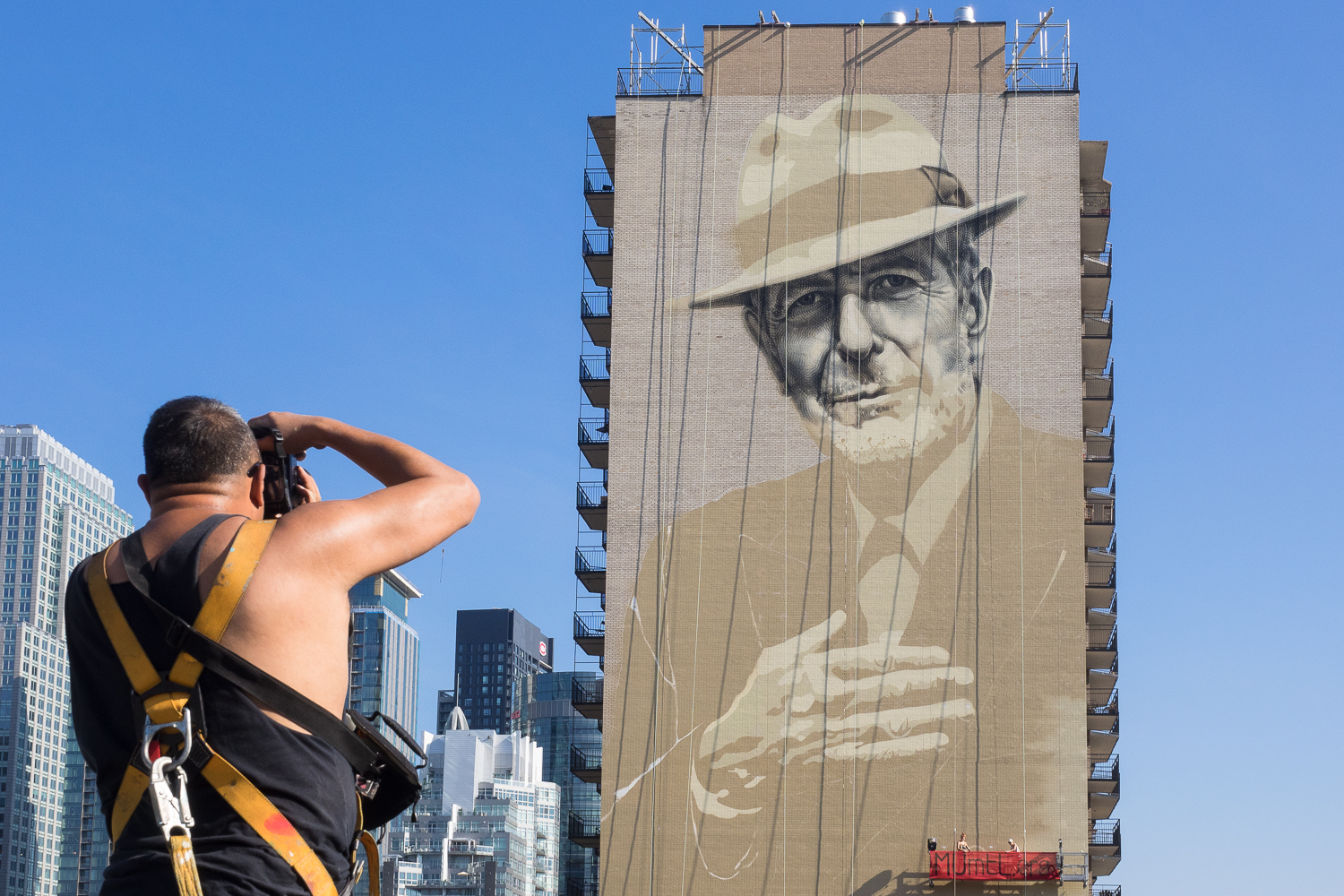
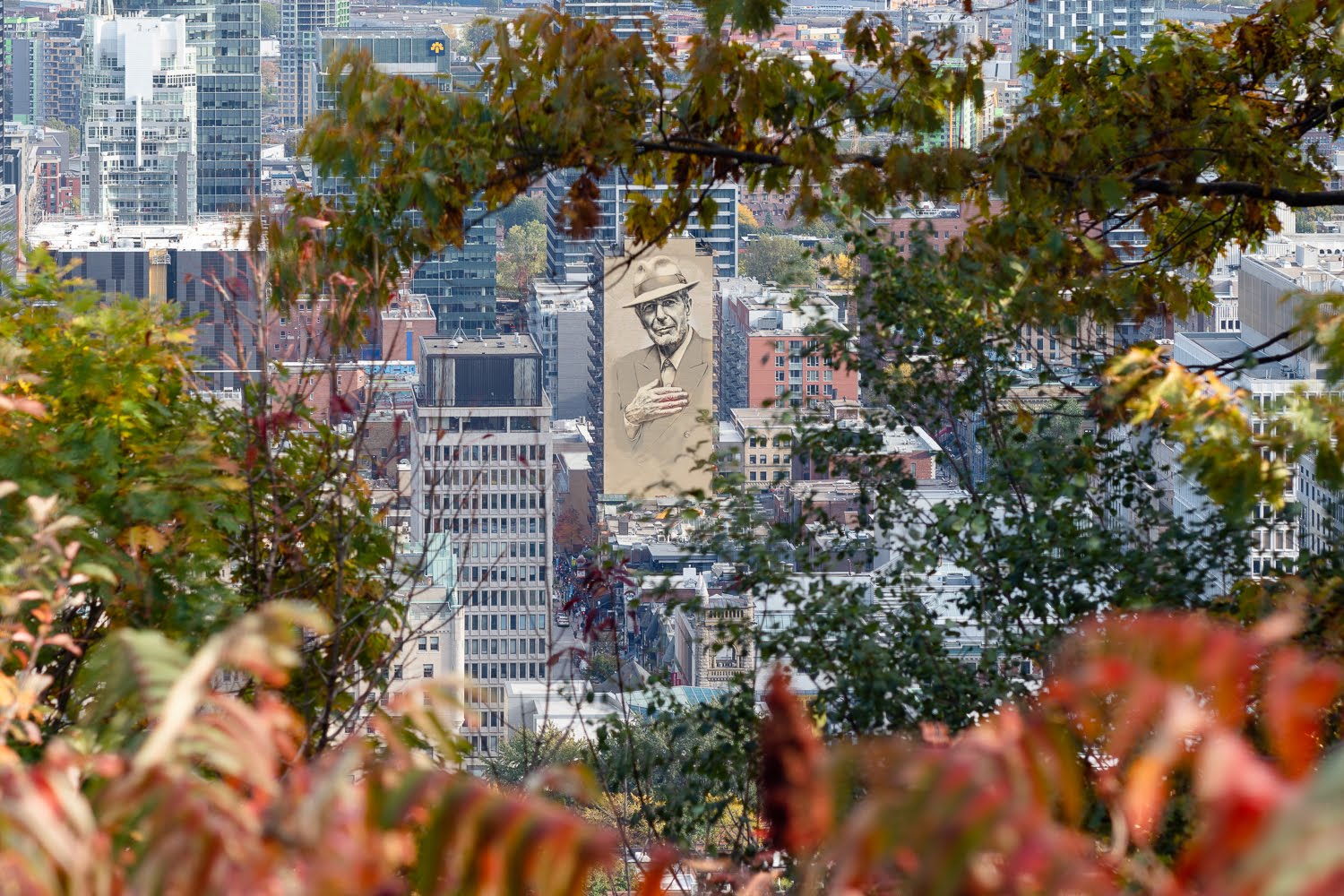
Creation and final result of the mural tribute to Leonard Cohen | Photo credits: Olivier Bousquet
.
.
20 years of transformation, one story at a time
Perhaps this is what MU has learned over the past 20 years: public art is never limited to what’s painted on a wall. There’s everything that happens around it, the bonds that form, the conversations that begin, the children who take part, the artists who invest themselves in a neighborhood, the communities who recognize themselves, the spaces that change purpose, the places that become more vibrant, welcoming, and safe.
And there’s also Montreal itself, which transforms, tells its story, and becomes known in new ways through these works.
Thursday, September 10, 2026.